How Proofreading and Editing Shape French Political News
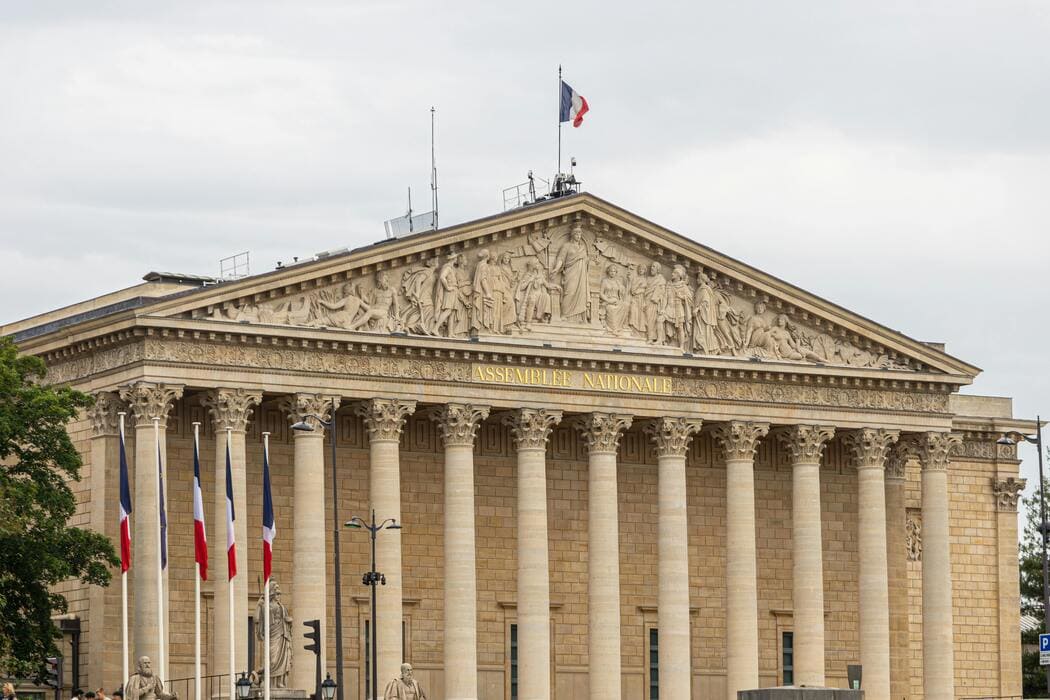
Behind every sharp headline, exclusive scoop, and televised debate recap, there is an invisible layer of work that determines how accurate, trustworthy, and impactful French political coverage will be. That layer is made up of meticulous proofreading and careful editing. From fact-checking statements made at the Assemblée nationale to clarifying complex legislative jargon and EU policy details, the editorial polishing process shapes how citizens interpret events, parties, and public figures. Without it, even the most well-researched political story can invite confusion, misinterpretation, and mistrust.
Newsrooms, independent journalists, NGOs, and think tanks increasingly rely on professional proofreading services to refine political pieces before they reach readers and viewers. This collaborative work between writers, editors, and proofreaders doesn’t just fix commas; it aligns language, logic, and evidence so that political information is coherent and credible. In an era of rapid news cycles and social media acceleration, the editorial process has become a form of quality assurance that protects both democratic debate and media reputation.
1. Turning Raw Political Information into Clear Public Messaging
French politics is dense with institutional terms, legal nuance, and policy-specific vocabulary. Raw information—from press conferences, committee reports, or leaked documents—can be difficult for the public to decipher. Editing transforms this complexity into accessible language, while proofreading ensures that grammar and structure support clarity rather than obstruct it.
For example, distinctions between ordonnance, décret, and proposition de loi matter. A single misused term can mislead audiences about who holds authority or how a measure might be implemented. Skilled proofreaders spot these nuances and ensure consistency, so that the public receives an accurate representation of political processes instead of a confusing tangle of jargon.
2. Preserving Accuracy in Fast-Moving Political Stories
Political news in France often moves at high speed—especially around elections, cabinet reshuffles, strikes, or referendums. Journalists may file copy within minutes of a press statement or breaking event. Under this time pressure, typos, misquotes, and numerical errors become more likely.
Proofreading is the last barrier between rushed content and the public record. It catches incorrect dates for key votes, misattributed quotations from ministers or party leaders, and misreported figures on unemployment, public spending, or polling. This safeguard is essential when international outlets translate and rebroadcast French political news, as even a minor error can spiral into widespread misinformation.
3. Protecting Credibility and Neutrality in Polarized Debates
Political polarization in France, as elsewhere, forces news organizations to take particular care with tone and word choice. Editors shape how a story frames a protest, a policy, or a speech, while proofreaders enforce linguistic neutrality and consistency. Subtle wording can tilt a report toward sensationalism or partisanship, even when the data are correct.
Terms like “radical,” “controversial,” or “historic” carry strong connotations. Careful editorial review questions whether such labels are justified or merely rhetorical. Proofreaders then ensure that similar standards are applied across coverage of different parties and movements, limiting bias in descriptions of the left, right, and center. This process strengthens public trust and gives audiences a more balanced view of the political spectrum.
4. Reducing Ambiguity in Sensitive or Legal Content
Political journalism often touches on legal matters—corruption allegations, campaign finance investigations, or constitutional rulings. Vague or imprecise wording can imply guilt before trial or misrepresent what a legal decision actually says. Editors work closely with legal teams, and proofreaders ensure that the final text reflects legal realities with precision.
For instance, there is a difference between “accused,” “charged,” “convicted,” and “under investigation.” Misusing these terms may expose a media outlet to defamation claims and undermine fair reporting. Careful proofreading checks that such distinctions are respected throughout the article and that no sentence can reasonably be read as making unsupported allegations.
5. Ensuring Consistency Across Multi-Platform Political Coverage
French political news is no longer confined to print or evening broadcasts. The same story appears on websites, apps, newsletters, podcasts, and social media posts. Each platform can fragment or shorten the message, increasing the risk of inconsistency or contradiction.
Editorial teams and proofreaders maintain a coherent narrative across headlines, bullet points, and full articles. They verify that the figures in a data visualization match those in the written analysis, that social media captions do not oversimplify to the point of distortion, and that summaries retain the nuance of the original long-form piece. This coherence is crucial when audiences encounter only a headline or a short clip rather than the full story.
6. Managing Multilingual Coverage of French Politics
French political developments attract worldwide attention—especially regarding European Union policy, international diplomacy, and economic reform. Many organizations cover French politics in multiple languages. Editorial teams then face a dual challenge: preserving meaning across languages while adapting to different cultural and political contexts.
In this setting, bilingual editors and specialized proofreaders check not only grammar but also conceptual accuracy. They ensure that terms like laïcité, sécurité sociale, or cohabitation are translated and explained correctly, rather than approximated with misleading foreign equivalents. This multilingual editorial work keeps international audiences from misinterpreting uniquely French political realities.
7. Supporting Investigative Work with Rigorous Verification
Investigative journalism in the political sphere—examining lobbying, campaign financing, public contracts, and ethics—relies on meticulous documentation. Here, proofreading is as much about fact-checking as it is about language. Every figure, citation, and reference must be traceable and correct.
Editors test the logic of long-form investigations, identifying gaps or contradictions. Proofreaders then cross-check names, timelines, acronyms, and interlinked data. The result is not just a polished narrative but a robust piece of work that can withstand scrutiny from officials, experts, and rival media organizations. In a context where trust in institutions is frequently questioned, this rigor is vital.
8. Enhancing Search Visibility for Political Content
In the digital era, how readers find political news is heavily influenced by search engines. Clear headlines, coherent structure, and accurate metadata all play a role in visibility. Editing shapes these elements, and proofreading ensures they match the content and reflect the central themes of the piece.
Well-structured articles with precise language and correct spelling perform better in search results than vague or error-filled content. This means that careful editorial work doesn’t just improve readability—it helps credible political coverage outrank misleading or manipulative sources. For French political news, where competing narratives are constant, search visibility becomes a democratic issue as much as a technical one.
Conclusion: Editorial Precision as a Pillar of Democratic Debate
The work of proofreading and editing is often invisible to the public, yet it shapes how people understand elections, policies, and public figures. From clarifying complex institutional language to preserving neutrality, ensuring legal accuracy, and supporting investigative rigor, editorial precision underpins the reliability of political information.
As French political news continues to unfold across print, broadcast, and digital platforms, the demand for meticulous editorial standards will only grow. Investing in rigorous proofreading and careful editing is not simply a matter of style; it is a commitment to transparency, accuracy, and informed civic engagement. In a media environment crowded with noise and speed, this commitment helps keep democratic conversation grounded in facts and clearly communicated ideas.